




Back in September 2022, NASA deliberately crashed a spacecraft into an asteroid traveling through space. It sounds like something dreamed up during a Hollywood disaster movie, except the experiment actually worked. NASA’s Double Asteroid Redirection Test, better known as DART, successfully changed the orbit of a small asteroid named Dimorphos. Now, four years later, the European Space Agency has arrived at the scene to answer an important question: What exactly happened when humanity punched an asteroid in the face?
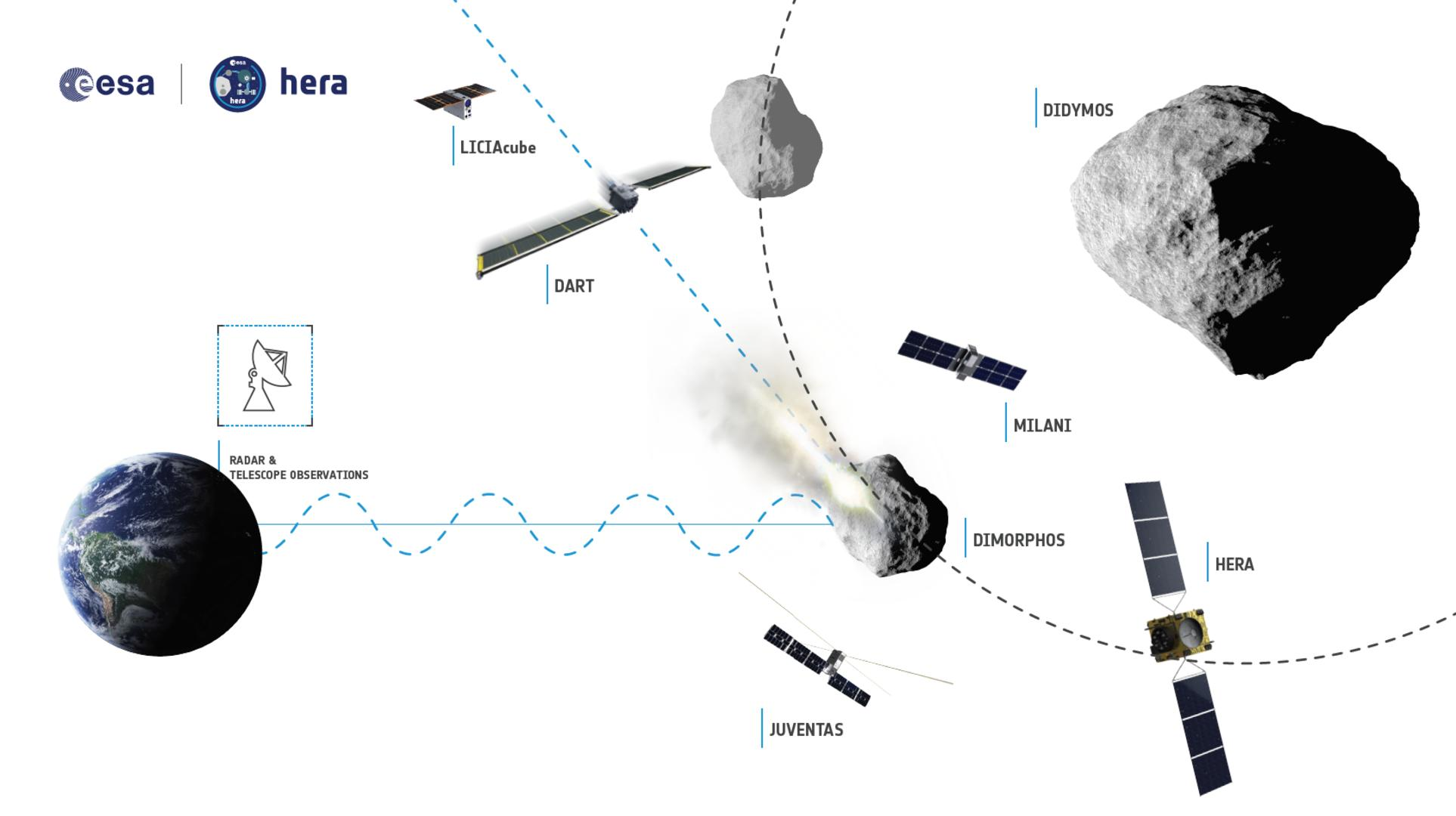
ESA’s Hera spacecraft reached the Didymos asteroid system in early November 2026 after a two-year journey through space. The mission is now operating approximately 25 to 30 kilometers from its targets, collecting detailed information about the larger asteroid Didymos and its smaller companion Dimorphos. Scientists already know NASA’s impact changed Dimorphos’ orbit around Didymos by roughly 33 minutes, considerably more than originally anticipated. What they don’t know is precisely how the collision altered the asteroid’s physical structure.
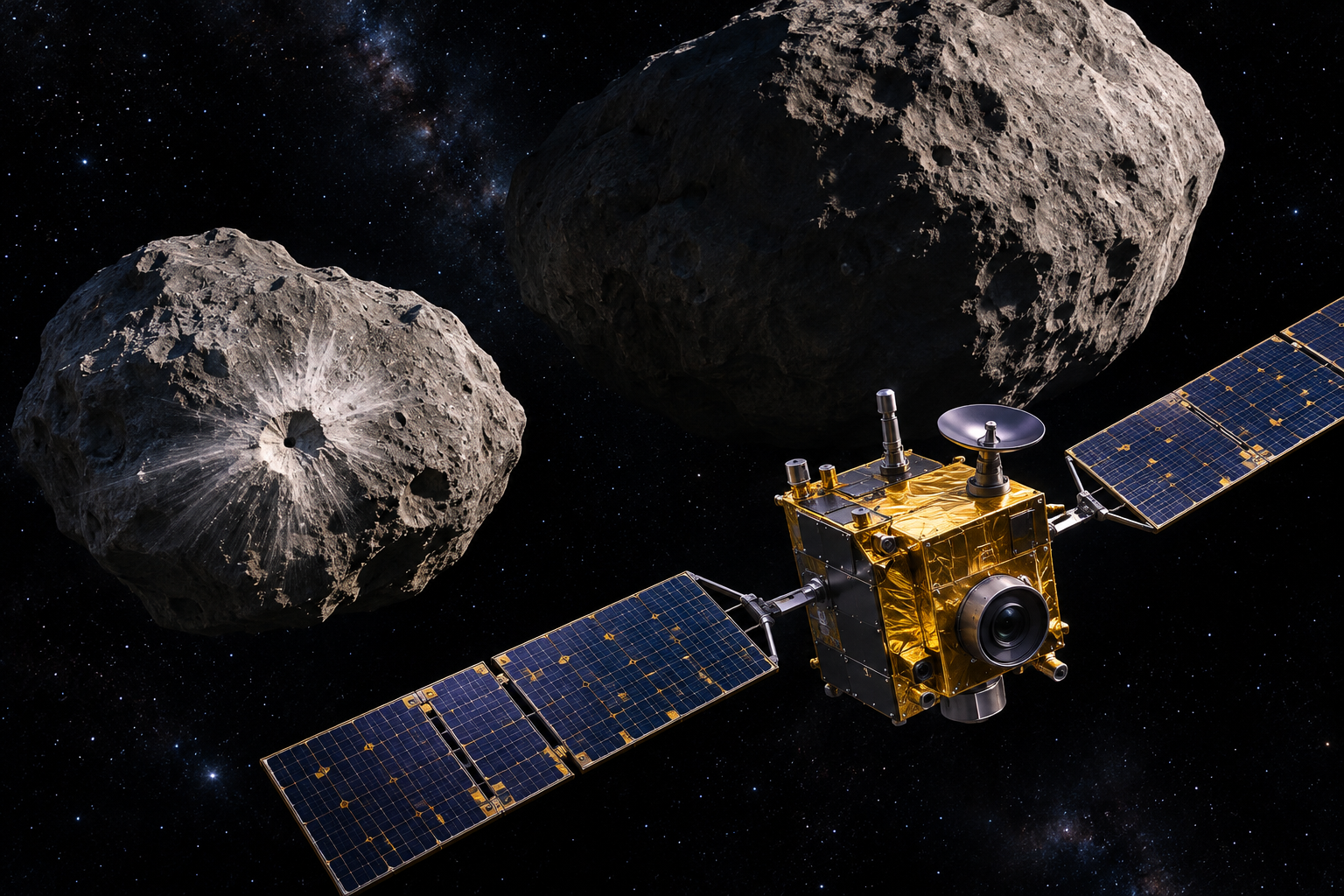
That’s where Hera comes in. Equipped with advanced cameras and scientific instruments, the spacecraft will examine the asteroids’ shapes, masses, surface characteristics and internal properties. Researchers want to determine whether NASA’s collision created a substantial crater, displaced enormous amounts of material or potentially reshaped Dimorphos itself. The answers matter because predicting how an asteroid responds to an impact could eventually determine whether humanity can redirect a dangerous object heading toward Earth.
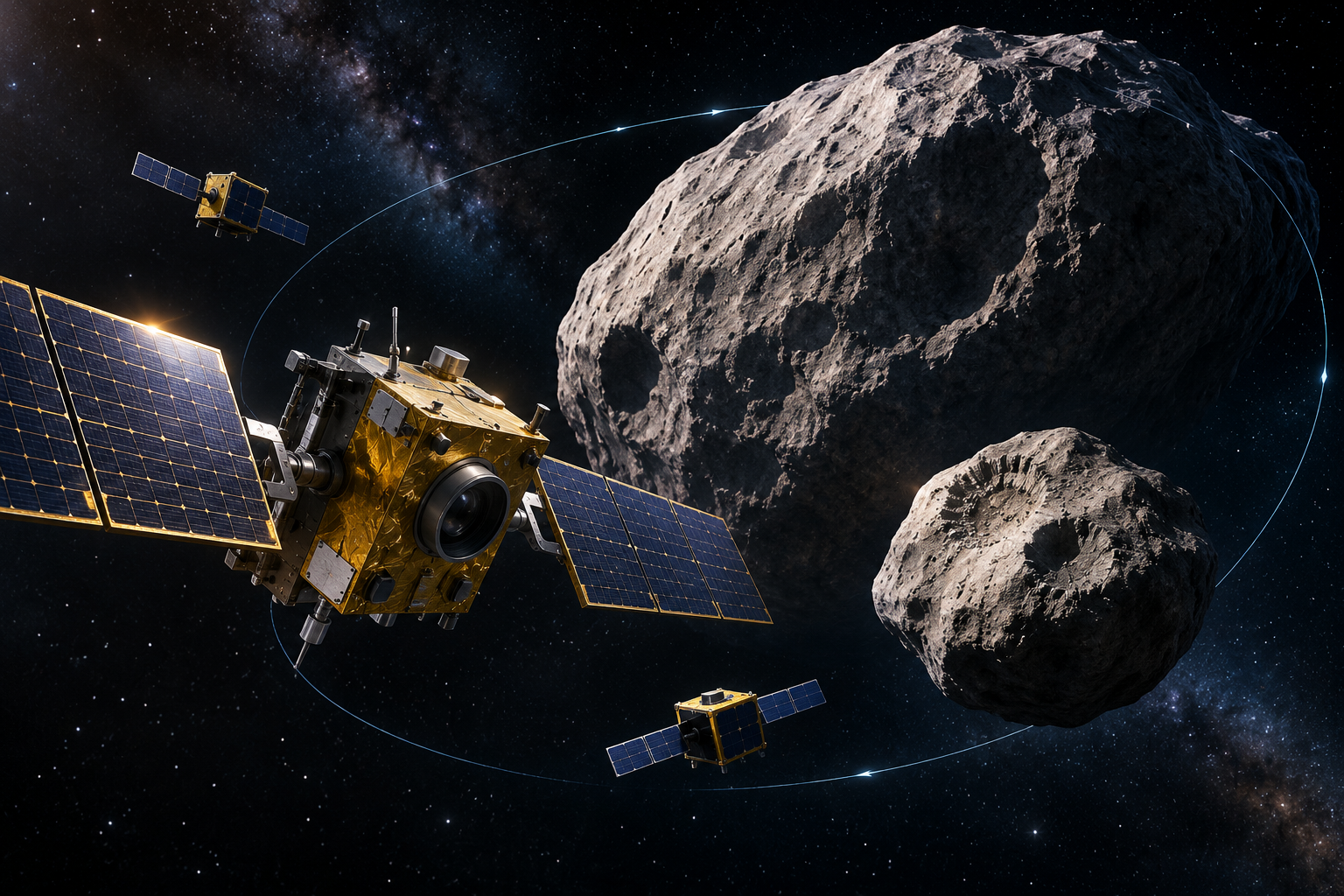
Hera’s navigation is fascinating in its own right. Rather than following a conventional circular orbit, the spacecraft is flying a series of rectangular paths around the asteroid pair. Their gravity is so incredibly weak that traditional orbital maneuvers become impractical. Hera travels at approximately 12 centimeters per second relative to the asteroids, making its journey more comparable to a crawling insect than the high-speed spacecraft maneuvers we’re accustomed to seeing in science fiction.
The investigation will become even more interesting in the coming months. ESA plans to move Hera closer to the asteroids during December, allowing scientists to examine their surfaces in greater detail. The spacecraft also carries two small companion satellites, Juventas and Milani, which are scheduled for deployment in 2027. These miniature explorers will conduct additional measurements and help researchers better understand the physical properties of the asteroid system.
There’s an important distinction worth remembering: neither Didymos nor Dimorphos currently threatens Earth. This mission is about preparing for a future danger, not responding to an approaching catastrophe. NASA proved that striking an asteroid can change its trajectory. ESA is now gathering the evidence needed to make that technique predictable and potentially repeatable. It’s international cooperation with a very practical objective: making sure humanity has options if a genuinely dangerous asteroid ever appears on the horizon.
And while Hollywood might prefer a heroic last-minute nuclear explosion, scientists would much rather identify a threatening asteroid early enough to make a relatively small correction. A tiny change in trajectory, given sufficient time, could mean the difference between a harmless flyby and a catastrophic impact. Hera may eventually help transform planetary defense from an impressive experiment into a dependable technology. If scientists discovered a large asteroid headed toward Earth decades from now, would you trust a spacecraft to knock it off course? Tell us what you think in the comments.
Sources: European Space Agency — Hera spacecraft in rectangular orbit, November 11, 2026; ESA Hera mission overview.