






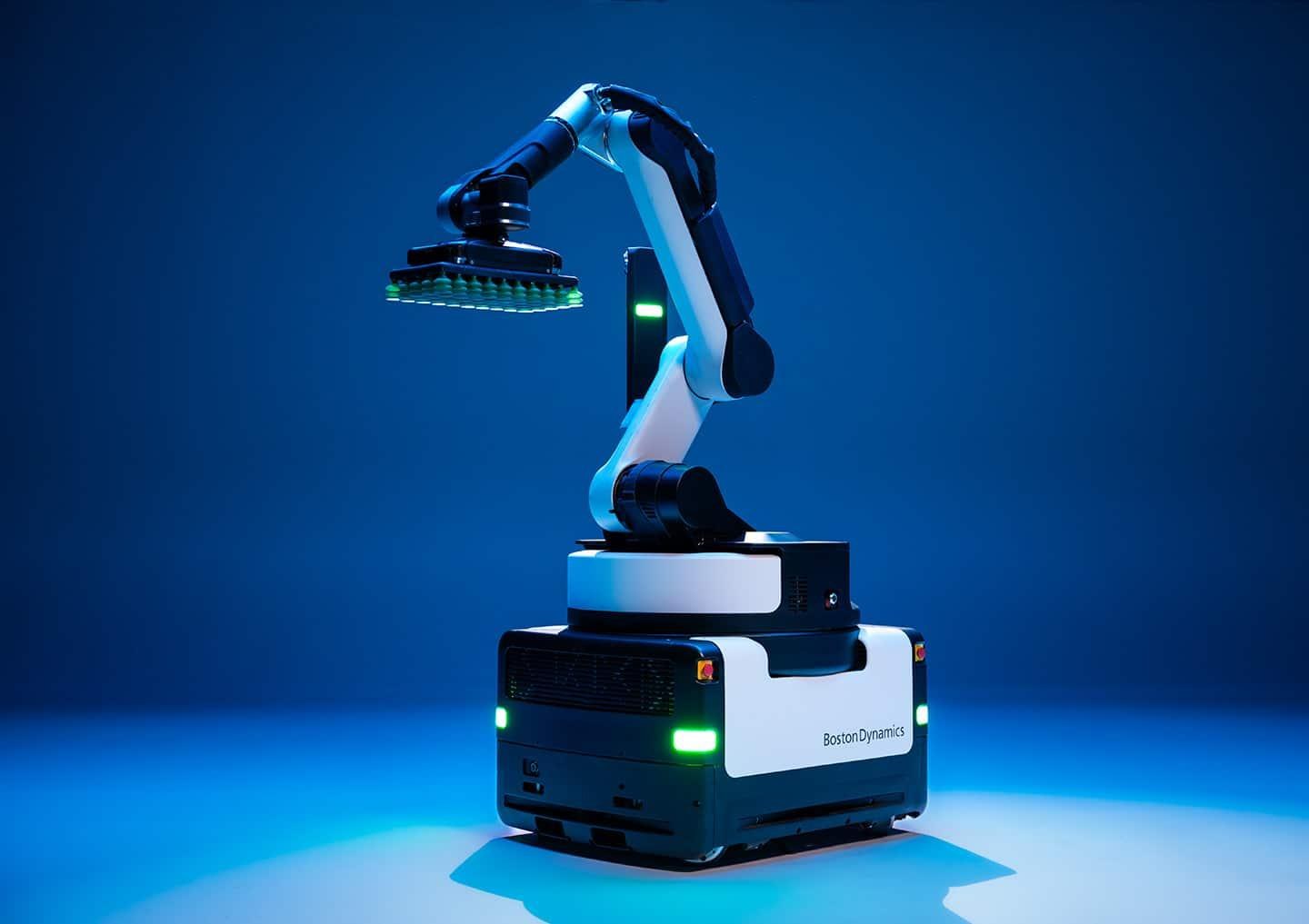
The robots are coming for our jobs, and apparently they have decided to start with the one nobody enjoys: unloading a tractor-trailer full of boxes in a sweltering warehouse. On November 3, Boston Dynamics introduced Stretch Gen 2, a redesigned version of its mobile box-handling robot. Unlike the company’s acrobatic humanoids, this machine has no interest in doing backflips for YouTube. It wants to move cardboard until the loading dock runs out of cardboard.
That is a surprisingly serious ambition. Warehouses need freight moved quickly, repeatedly and safely, often in cramped trailers with uneven floors and packages stacked by someone who seems to have been playing three-dimensional Jenga while blindfolded. Stretch uses a mobile base, a long robotic arm, a vacuum gripper and vision software to pick boxes and move them onto conveyors. It is a specialist, not a general-purpose robot butler. Ask it to make coffee and you may end up with an extremely well-organized pile of coffee boxes.
Boston Dynamics says its new version is built around lessons from more than 100,000 hours of first-generation operation and tens of millions of boxes handled. That is the sort of real-world experience that teaches engineers an important truth: the flashy demonstration is the easy part. Keeping a machine operating at 2:17 on a Tuesday after somebody drops a box on it is where the real engineering begins.
The company says Stretch Gen 2 cuts internal cabling by 81 percent, roughly half a mile of wiring, and uses tougher connectors and redesigned rotating joints. The new gripper incorporates improved sensing and valve systems. Exterior panels and the emergency-stop arrangement have also been revised to reduce accidental shutdowns when the working environment behaves like an actual warehouse rather than a pristine product video.
Maintenance may be the most interesting improvement of all. Boston Dynamics says a complete swerve-drive swap that previously required a full day can now take around an hour. If you run a logistics operation, that is the difference between a manageable interruption and a supervisor developing a new vocabulary of profanity.
The company quotes throughput of up to 1,000 cases per hour, depending on the boxes and conditions, and says the battery can cover two shifts. A fast charger is claimed to reach 90 percent in about 75 minutes. Boston Dynamics supplied those figures. Throughput and battery life will depend on the trailer, the freight and the workday.
The larger story is not that robots suddenly learned to pick up boxes. It is that robotics companies are learning to build equipment that can be serviced, upgraded and trusted in everyday industrial settings. The real revolution may arrive without a humanoid face, a dramatic soundtrack or a single backflip. It may simply clear the loading dock before lunch. Give this a like and tell me what would win you over as a warehouse manager: faster unloading or a repair you can finish before lunch?