






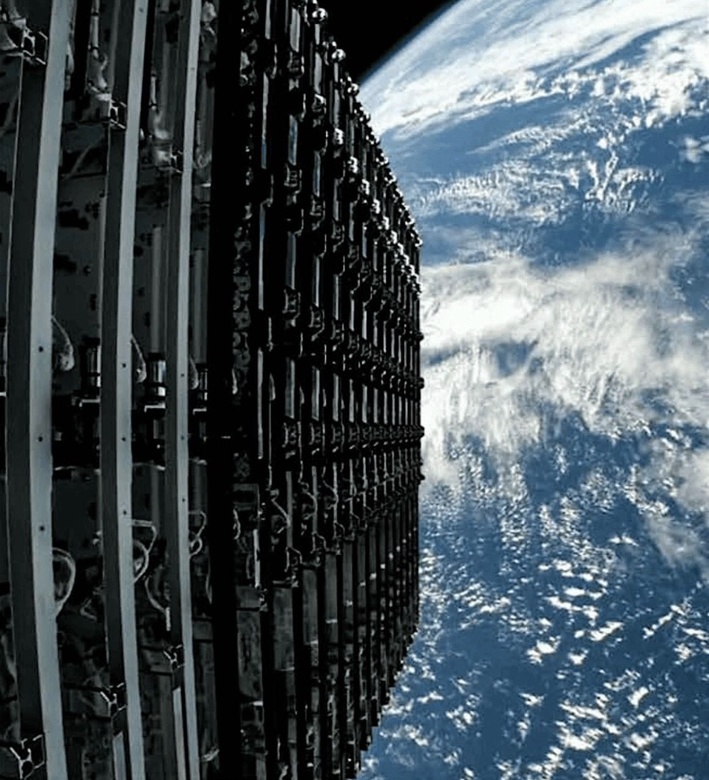
There are ambitious technology projects, and then there is asking permission to put a million computers in space. On November 25 the FCC gave SpaceX conditional authorization for its Starmind orbital computing constellation, with a ceiling of one million satellites. That is not a million satellites suddenly appearing overhead, nor is it proof that the economics work. But the idea is sufficiently audacious that I want to understand what it would take to make it work. We have spent the last few years watching artificial intelligence consume enormous amounts of electricity and debating where to build the facilities that supply it. What if some of that computing happened above the planet instead?
The attraction starts with electricity. A satellite can collect solar energy without clouds getting in the way, and carefully chosen orbits can offer long periods of sunlight. That does not mean unlimited free electricity. Solar panels have to be manufactured, launched, maintained in an unforgiving environment and paired with power electronics and potentially batteries. Computing equipment needs a steady supply even when the spacecraft passes through shadow. There is an enormous difference between a solar panel keeping a satellite radio alive and an array supplying a collection of hungry AI accelerators. Still, the possibility of expanding computing without acquiring another enormous piece of land and negotiating another big connection to the electric grid is intriguing. I can understand why engineers are interested.
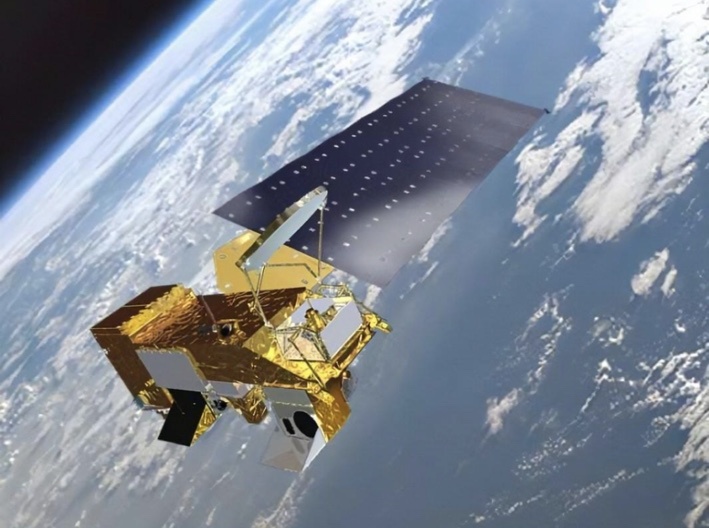
Cooling is where the apparently simple idea gets complicated. Space is cold in the sense that an object can radiate energy into its surroundings, but there is no surrounding air to carry heat away from a computer. On Earth we use fans, liquid cooling and heat exchangers to move heat out of server racks. In orbit the spacecraft ultimately needs radiators. Those radiators need surface area, add weight and must be arranged so they can actually reject heat. Sunlight and radiation from the Earth can complicate the job. A powerful processor does not stop producing heat just because it has left Florida. If somebody can engineer a lightweight, reliable cooling system that scales economically, that could be as significant as the computing hardware itself. It is a wonderful example of why the space version of an ordinary machine is rarely ordinary.
Then there is the question of getting useful information to and from all those computers. The FCC authorization includes optical communications with radio links for backup. Laser connections can move substantial amounts of information between spacecraft, but the network must keep track of moving satellites, route traffic and connect with equipment on Earth. Training a large model across many accelerators can demand frequent exchanges of data. It is not enough to count the number of chips overhead and declare victory. The software and communications architecture have to make those chips useful together. Some jobs could be particularly well suited to orbit, such as processing observations near the sensors that collect them. Others might be more economical in a conventional building. I would love to see actual workloads compared instead of treating every form of AI computing as interchangeable.
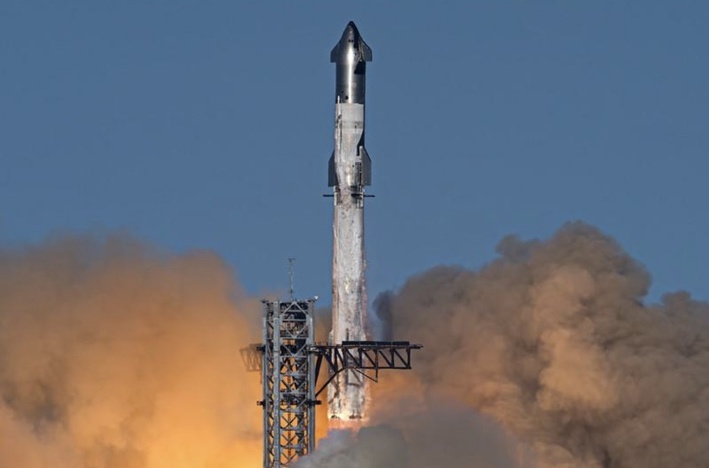
The launch economics are equally fascinating. Reuters reports that the authorization gives SpaceX until 2033 to start deployment and sets subsequent milestones. Starship could be an important part of the plan if it delivers the necessary capacity and cost reductions. But launching a satellite is only the beginning of its financial life. Servers eventually become obsolete, radiation can damage electronics, and a technician cannot stroll down an aisle in orbit to replace a failed board. A successful system would need to accommodate failures, retire aging hardware and keep delivering useful work without costing more than the alternatives. Think about how quickly the graphics hardware in a desktop PC changes, and then imagine having to send its replacement into space. That is an extraordinary engineering and business problem, not merely a bigger version of buying another server.
Of course, the sky is not an empty warehouse waiting for us to fill it. Astronomers have raised concerns about the effect of additional satellites on observations, while specialists worry about congestion, collisions and the environmental consequences of launches and atmospheric reentry. Even a very small failure percentage becomes a big absolute number when the fleet is this large. Reuters has reported on those concerns, and I think they deserve to be taken seriously alongside the exciting possibilities. An authorization is not a guarantee of safety or commercial success. I would rather see a convincing demonstration of reliable disposal, collision avoidance, useful computing performance and honest lifetime costs than a race to meet an impressive satellite count. There is plenty of room for excitement without pretending that every objection is an attack on innovation.
What I find most exciting is the possibility that the project could force new thinking about power generation, thermal management, networking and modular electronics. Even an orbital computing system much smaller than the authorization might produce useful advances in those fields. Imagine a spacecraft that can process enormous quantities of scientific observations and transmit only the interesting results, or a network that moves specialized workloads between Earth and orbit depending on where they make the most sense. Those are possibilities rather than announced products, and they would need to compete with continually improving terrestrial technology. An ordinary data center has the luxury of being connected by fiber, being accessible to maintenance crews and having relatively straightforward ways to expand. SpaceX has to make a compelling case against that very practical competition. Give this article a like if the engineering intrigues you, and tell me whether you would rather see the next generation of AI infrastructure built in orbit or right here on Earth.