





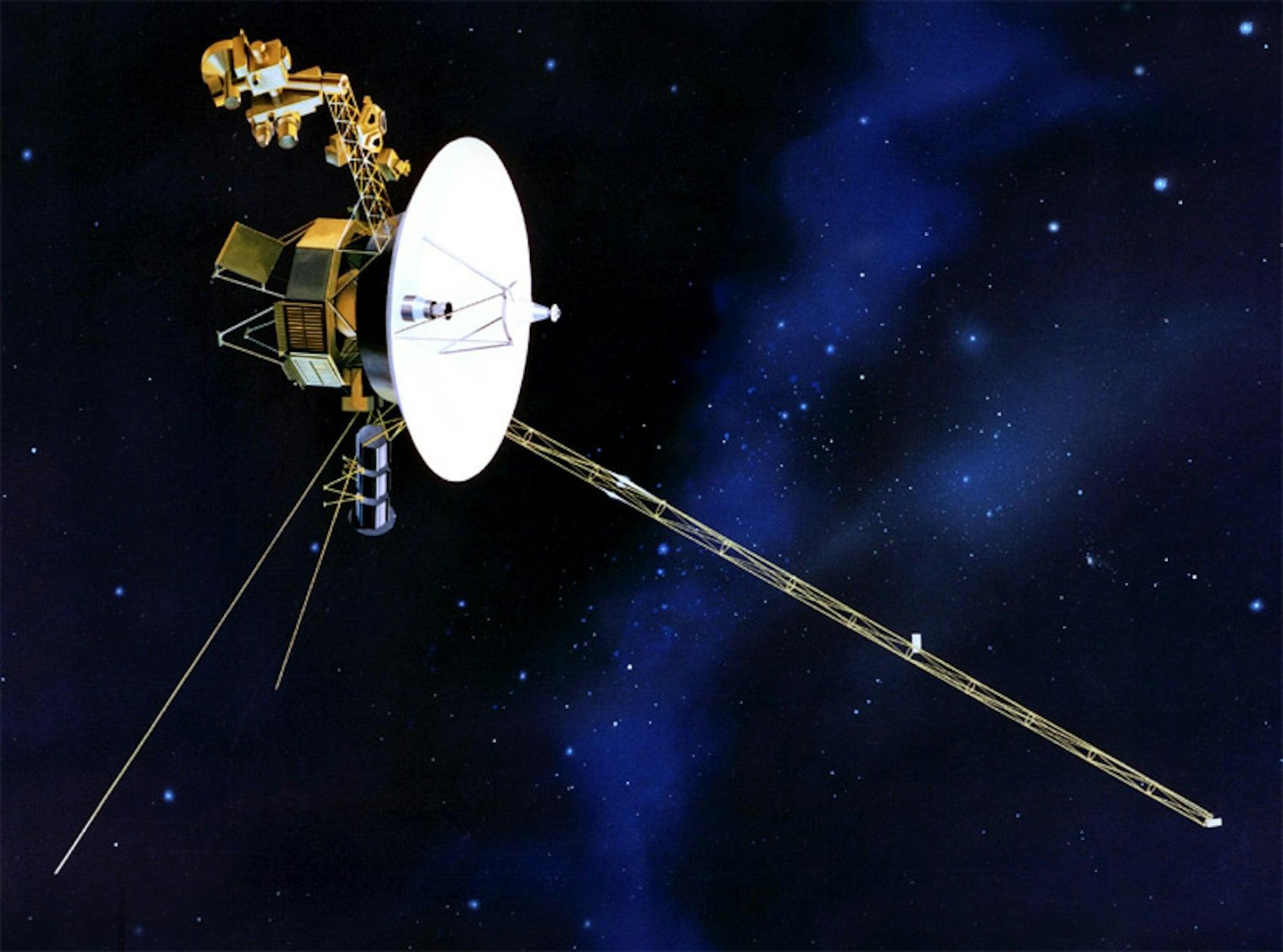
Somewhere out in the darkness between the stars, a little spacecraft built in the 1970s just accomplished something extraordinary. NASA’s Voyager 1 has officially reached a distance of one light-day from Earth. That’s more than 16 billion miles away, making it the first human-made object ever to reach that milestone. And here’s the truly remarkable part: nearly 50 years after launch, we’re still talking to it. Meanwhile, some of us can’t get a reliable Wi-Fi signal in the garage.
Voyager 1 crossed the milestone on November 18, 2026, at 5:16 a.m. Eastern. A light-day isn’t a measure of how long the spacecraft has been traveling. It’s the distance light travels in 24 hours, approximately 16.1 billion miles. That means a radio signal sent from Earth now takes an entire day to reach Voyager 1. If the spacecraft immediately sends a response, we wait another day for it to arrive. That’s a minimum 48-hour conversation, assuming everything works perfectly. Imagine calling technical support and waiting two days just to hear someone say, “Have you tried turning it off and back on?”
Launched on September 5, 1977, Voyager 1 was originally designed to explore Jupiter and Saturn. Its mission was supposed to last a few years, not half a century. But after sending back spectacular observations of the giant planets and their moons, the spacecraft kept going. In 2012, it crossed the heliopause, the boundary where the solar wind gives way to interstellar space. Voyager 2 followed in 2018. Both spacecraft are now operating beyond the Sun’s protective bubble of charged particles, exploring territory no spacecraft had ever visited before.
Consider the technology involved. Voyager 1 was designed before the personal computer revolution, before smartphones, before GPS became an everyday convenience, and before most of the technology we now consider essential even existed. It carries computers with capabilities that look laughably primitive by modern standards, along with scientific instruments and communication systems engineered to survive conditions that would destroy ordinary electronics. Yet engineers at NASA’s Jet Propulsion Laboratory continue finding ways to keep the aging spacecraft operating. The thing has been flying through space since Jimmy Carter was president. That’s not just impressive engineering. That’s practically mechanical immortality.
Keeping Voyager alive has become an increasingly delicate balancing act. Its electricity comes from radioisotope thermoelectric generators, which convert heat from decaying plutonium into power. That supply gradually declines, forcing NASA to shut down instruments and other equipment to preserve enough energy for the remaining science experiments and communications. Engineers also have to diagnose problems across billions of miles, using commands that take a full day to arrive. There are no service appointments, replacement parts deliveries, or technicians willing to make a house call. Even Amazon Prime has its limits.
And then there’s the Golden Record, perhaps the most wonderfully optimistic piece of cargo humanity has ever launched into space. Both Voyager spacecraft carry gold-plated records containing greetings in 55 languages, music from different cultures, sounds of nature, and images representing life on Earth. The idea was simple: if an extraterrestrial civilization ever encounters one of these spacecraft, it might learn something about the strange little planet that sent it. The record even includes instructions explaining how to play it. Apparently, NASA anticipated the possibility of meeting aliens but wisely decided not to assume they owned a turntable.
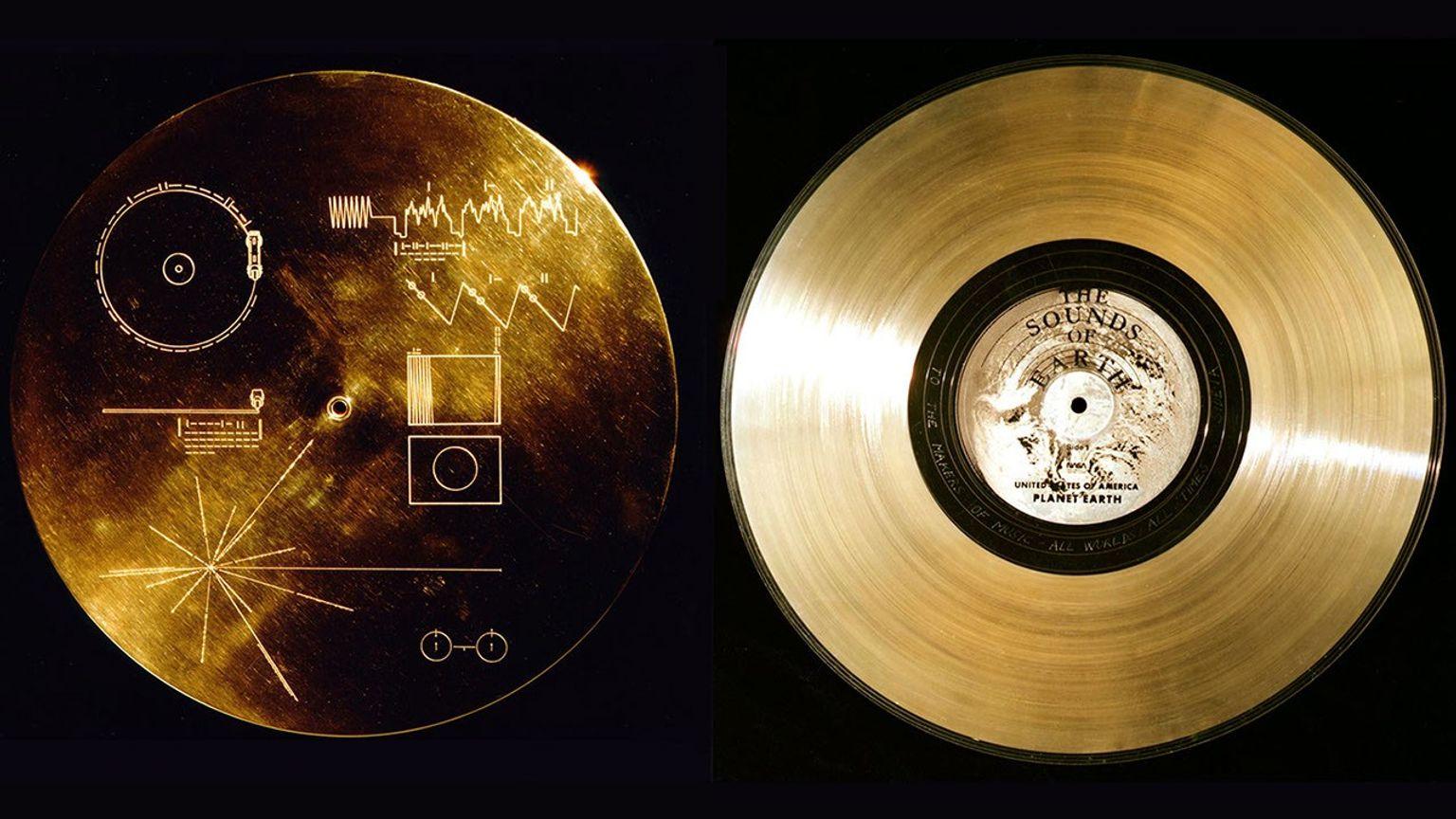
Of course, the chances of an alien civilization actually finding Voyager 1 are extraordinarily small. Space is unimaginably vast, and the spacecraft isn’t heading toward any known extraterrestrial civilization. Even traveling at tens of thousands of miles per hour, it would take tens of thousands of years to pass relatively close to another star. But that’s part of what makes the Golden Record so fascinating. It’s not really a practical communication system. It’s a message in a bottle tossed into a cosmic ocean, carrying a little evidence that we were here and thought somebody else might be out there.
NASA is celebrating the light-day milestone with events honoring the mission, including a November 19 discussion with scientists and engineers about the spacecraft’s future. The agency also invited people around the world to flash Voyager’s call sign, VGR, in Morse code toward the night sky. No, those flashlight beams aren’t going to catch up with the spacecraft in any meaningful way. It’s a symbolic gesture, but a pretty wonderful one. Nearly half a century after launch, people are still gathering to celebrate a machine that has never stopped exploring.
And while Voyager 1 continues outward, it still has science to do. The spacecraft measures conditions in interstellar space, helping researchers understand the environment beyond the heliosphere and how our solar system interacts with the surrounding galaxy. Eventually, declining electrical power will end the mission’s ability to communicate with Earth. But the spacecraft itself won’t simply disappear. It will continue traveling through the Milky Way, carrying its instruments, its Golden Record, and a small piece of human history long after its final signal fades.
There’s something humbling about that. We live in an age when perfectly good electronics become obsolete after a few years, software updates occasionally cripple essential services, and companies keep insisting that the next big thing will change everything. Yet a spacecraft launched in 1977 has traveled more than 16 billion miles and is still reporting back to Earth. Voyager 1 doesn’t have artificial intelligence, a touchscreen, or a monthly subscription. It just keeps doing the job it was built to do.
Maybe that’s the most impressive technology story of all. Nearly 50 years ago, a group of engineers built something so reliable that it’s still exploring the universe today. And somewhere out there, beyond the familiar boundaries of our solar system, humanity’s little mechanical ambassador keeps moving forward, one mile at a time.
What do you think? Is Voyager 1 humanity’s greatest engineering achievement? And if an alien civilization eventually finds that Golden Record, what do you suppose they’ll make of us?
Sources: NASA Voyager Mission Status, NASA Jet Propulsion Laboratory, and NASA’s Light-Day Celebration.