






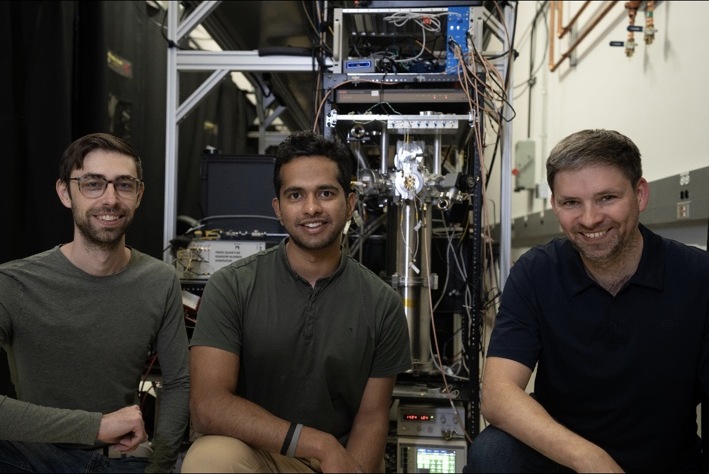
Imagine receiving a call from your bank and being able to verify not merely the caller’s credentials but that the equipment communicating with you is physically located inside the bank. That sounds like a rather ambitious security feature, and researchers at the National Institute of Standards and Technology have demonstrated a laboratory technique that brings the idea closer to reality.
The work, reported in Nature on November 18, concerns quantum position verification. The goal is to establish that a participant is operating from an expected location, even when the equipment involved cannot simply be assumed trustworthy. NIST cautions that practical deployment could be more than a decade away. This is a research milestone, not a feature arriving in your banking application next Tuesday.
Traditional digital authentication generally establishes that somebody possesses a credential. A password, a security key or a cryptographic signature can be extremely useful, but credentials do not inherently tell us where the person using them is located. A legitimate user might be traveling, and an attacker might be operating remotely with stolen access. Location can provide an additional security condition when the application actually requires it.
Ordinary location checks have weaknesses. A reported GPS position can be manipulated, and a network address is not a reliable indicator of the physical location of a particular person. Even a carefully timed network response may be complicated by intermediaries. A security system needs to distinguish an actual participant at the intended location from cooperating devices attempting to imitate one.
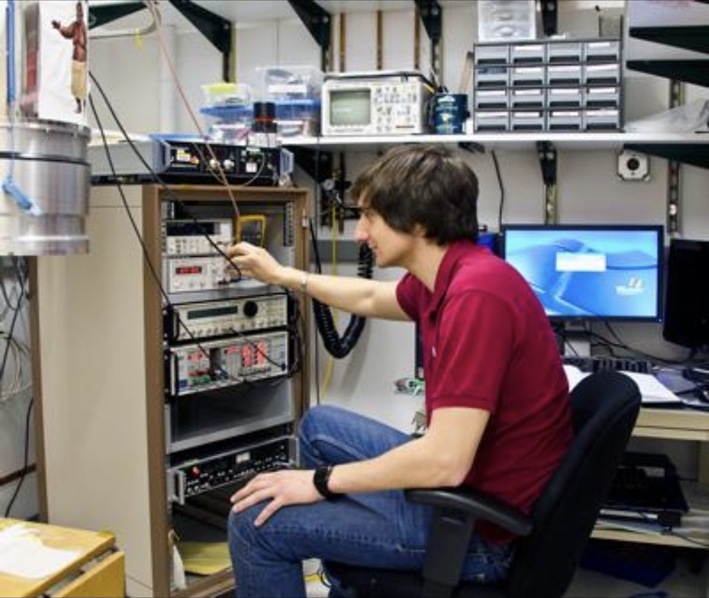
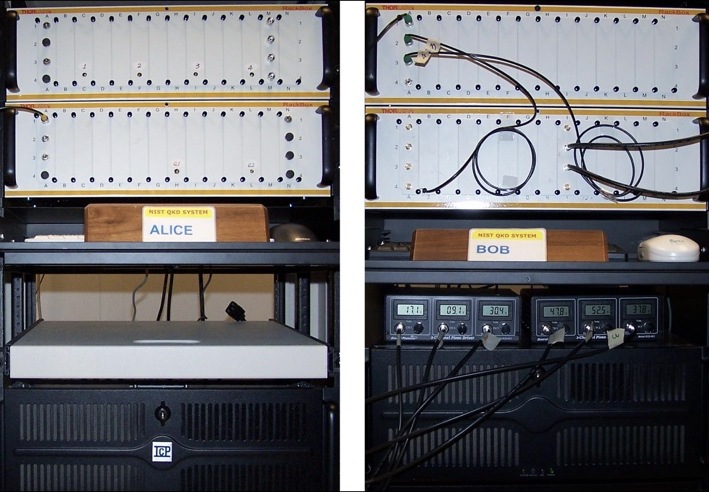
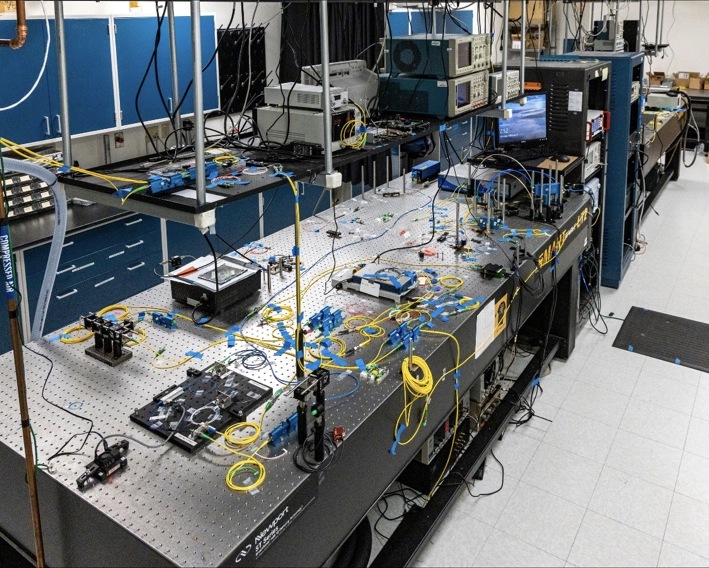
The NIST experiment used two verification stations separated by 195 meters. The system combined randomly selected measurement instructions with entangled photons and precise timing. The participant had to carry out the requested measurement and return the result within the expected time. The researchers also tested the resulting quantum correlations to address vulnerabilities that had affected earlier approaches.
Entanglement is one of the more peculiar features of quantum physics. Two particles can share correlations that cannot be reproduced by a simple classical description of independent objects. Measuring one particle does not provide a way to send a usable message instantaneously to the other side of the universe. That distinction matters because quantum security still operates within the limits imposed by relativity.
The timing requirement is particularly interesting. A signal traveling between two points cannot exceed the speed of light. If a device is farther away than it claims, the extra distance introduces a delay. The challenge is designing a protocol in which attackers cannot simply anticipate the questions or distribute the relevant information among cooperating devices to create a convincing response.
Quantum information introduces another useful constraint: an arbitrary unknown quantum state cannot be perfectly copied. This is different from a conventional digital file, which can be duplicated repeatedly without altering its contents. A protocol that exploits the difference can make certain attempts at imitation detectable. That does not mean every possible quantum communication system is automatically secure; the specific protocol and its assumptions remain essential.
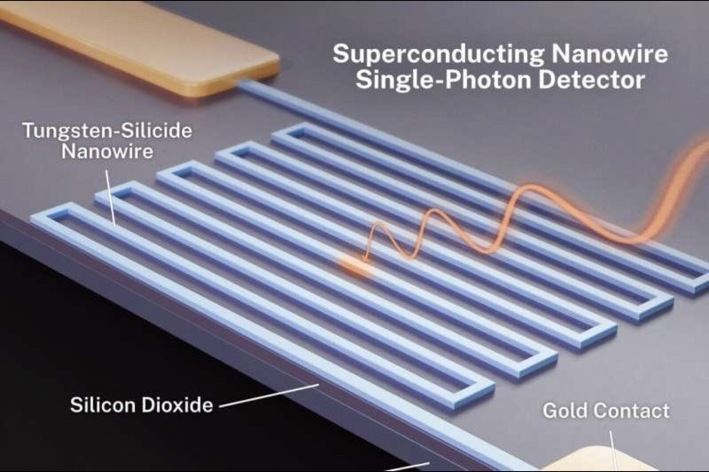
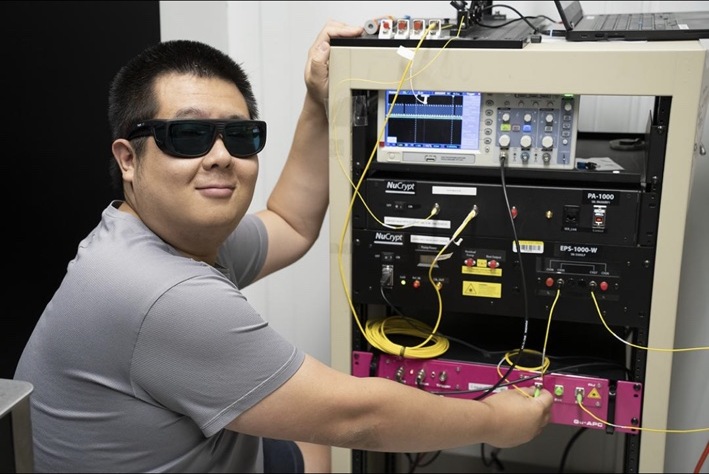
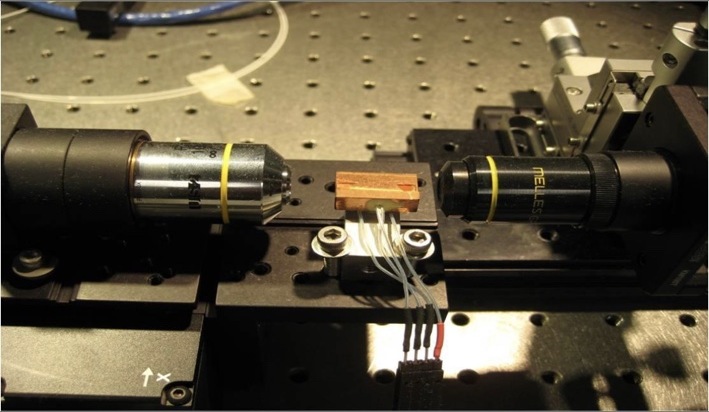
The experiment also illustrates why the hardware is so important. Detecting individual photons reliably is difficult. Losses, noise and imperfect measurements can undermine the ability to distinguish genuine results from fraudulent ones. NIST credits advances in photon detection and entangled-light generation as important elements of the demonstration. This is an area where decades of laboratory engineering can matter just as much as a clever theoretical idea.
Consider critical infrastructure. A utility might want certain sensitive commands to originate only from a designated control facility. A financial institution might impose a similar condition on particularly large transactions. Position verification could potentially supplement existing authentication in such settings, provided the system is designed to establish the right physical boundary and withstand realistic attacks.
There are also limits to what a location check can establish. A person inside an authorized building is not necessarily an authorized employee, and an authorized employee is not necessarily acting legitimately. Physical location, identity and permission are different security questions. A sensible implementation would combine them rather than discard established defenses in favor of an impressive new technology.
The infrastructure required for a practical system is another obstacle. Distributing quantum states reliably over substantial distances, maintaining accurate timing and integrating specialized detectors into a dependable network are not trivial tasks. Costs, maintenance and interoperability will determine whether the technology is suitable for a particular deployment. Conventional authentication will remain necessary for the foreseeable future.
Privacy deserves attention as well. A service that can verify a particular location should not automatically become a system for tracking everyone everywhere. The useful question is whether a participant satisfies a narrowly defined security condition at the moment it matters. How that result is stored, shared and governed would be just as important as the physics behind it.
What I find compelling about this research is that it gives security engineers another property of the physical world to work with. We have spent decades building systems around secrets that can be stolen and devices that can be compromised. Adding a carefully verified physical constraint could make certain remote attacks considerably harder. The promise is not that quantum physics will eliminate cybercrime. It is that a specific class of deception may become more difficult when the attacker has to contend with the laws of nature as well as the software.