






In April 2019, scientists unveiled one of the most extraordinary images in human history: the first photograph of a black hole. After decades of theoretical predictions, mathematical calculations, and some of the most sophisticated scientific instruments ever assembled, humanity finally got its first look at one of the universe’s most mysterious objects. And it looked like a glowing orange doughnut. I’m not sure what everyone expected. Perhaps some terrifying cosmic whirlpool, a giant hole torn through the fabric of space, or something resembling a portal from a science-fiction movie. Instead, we got what appeared to be a slightly blurry pastry floating in a sea of darkness. But that fuzzy orange ring was a monumental achievement, providing remarkable evidence that Albert Einstein’s understanding of gravity was on the right track more than a century after he developed his theory of general relativity.
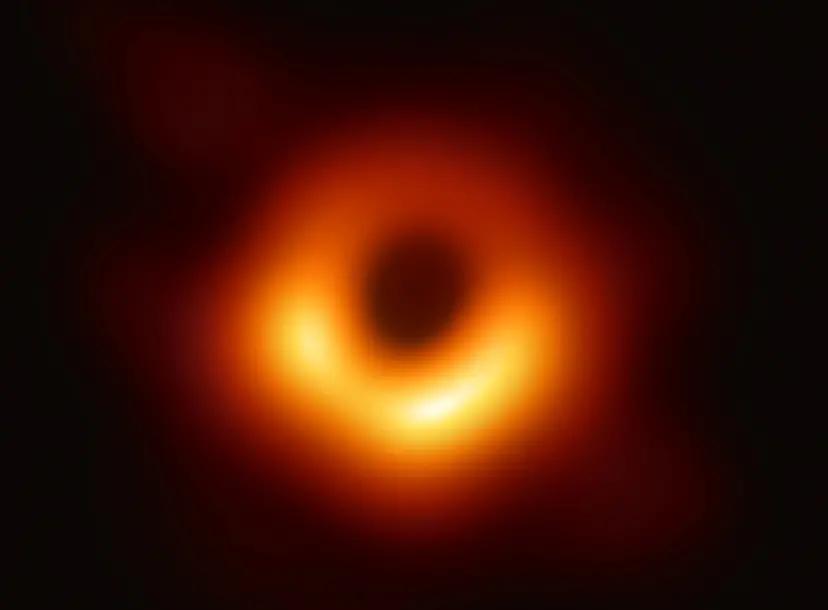
There was just one small problem. Some scientists weren’t entirely convinced the picture was accurate. Apparently, even when you photograph something 55 million light-years away, there’s always somebody ready to tell you the camera settings were wrong. To be fair, the skepticism wasn’t unreasonable. The original image wasn’t produced by simply pointing a camera at the sky and pressing a button. It required a worldwide network of radio telescopes, enormous amounts of data, and sophisticated computer algorithms to reconstruct something no conventional camera could possibly capture. When computers assemble pictures from incomplete information, the methods used to process that information can influence the final result. A legitimate scientific question emerged: was the famous orange ring really there, or had the software unintentionally created the shape researchers expected to see?
Photographing the Unphotographable
The object in question is M87*, a supermassive black hole lurking at the center of the galaxy Messier 87, approximately 55 million light-years from Earth. With roughly 6.5 billion times the mass of our Sun, it makes the black hole at the center of our own Milky Way look positively modest. Photographing something that far away presents a few technical challenges. For starters, you can’t exactly point your iPhone at the sky, pinch to zoom, and hope for the best. Scientists instead used the Event Horizon Telescope, an international network of radio observatories positioned around the globe. By combining their observations through a technique called very-long-baseline interferometry, researchers effectively created a virtual telescope roughly the size of Earth. Even that extraordinary achievement wasn’t enough to produce a conventional photograph. The telescopes collected radio measurements that specialized software reconstructed into an image, and the reconstruction process became one of the central questions surrounding the result.
Now, researchers from Australia’s national science agency, CSIRO, have independently reanalyzed the original Event Horizon Telescope observations using a substantially different technique. Their findings, published in Nature on November 11, 2026, confirm that the famous ring really is there. The researchers developed a new imaging method called GenDIReCT, combining advanced mathematical techniques with artificial intelligence to reconstruct the black hole’s appearance. What makes their approach particularly interesting is that they deliberately avoided teaching the AI what a black hole should look like. Instead, the system learned from ordinary photographs, including cats, dogs, and cars, before being tested against astronomical observations. Think about that for a moment. Scientists trained an artificial intelligence system using pictures of household pets and automobiles, then turned it loose on one of the most mysterious objects in the known universe. And it found the same glowing doughnut. I can’t get some AI systems to produce a human hand with five fingers consistently, but apparently we’ve reached the point where one can help independently verify a black hole 55 million light-years away. Technology is a strange business.
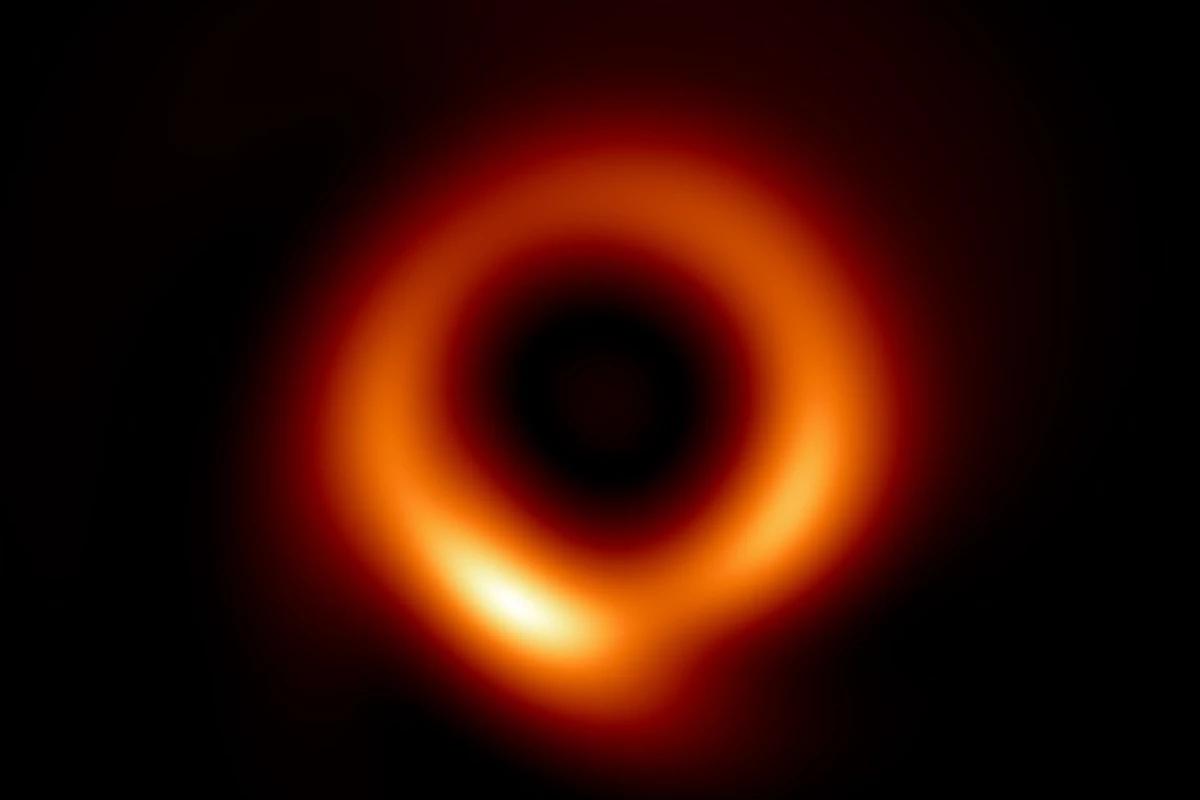
The Australian researchers also developed a technique for combining measurements from three telescopes at a time rather than relying exclusively on the usual pairs. This helped reduce certain calibration problems and atmospheric effects that complicate the reconstruction process. Across observations from multiple years, the results consistently revealed the same basic ring structure and approximately the same diameter as the original image. The new analysis doesn’t mean every scientific question about M87* has been answered, nor does it eliminate every possible uncertainty in the measurements. What it does provide is a valuable independent check using different mathematical and computational methods. The original researchers hadn’t accidentally manufactured a cosmic computer glitch. The enormous black hole really does appear surrounded by a glowing ring, and the defining feature of that historic 2019 image has survived another serious scientific examination.

Einstein, Hawking, and One Very Expensive Doughnut
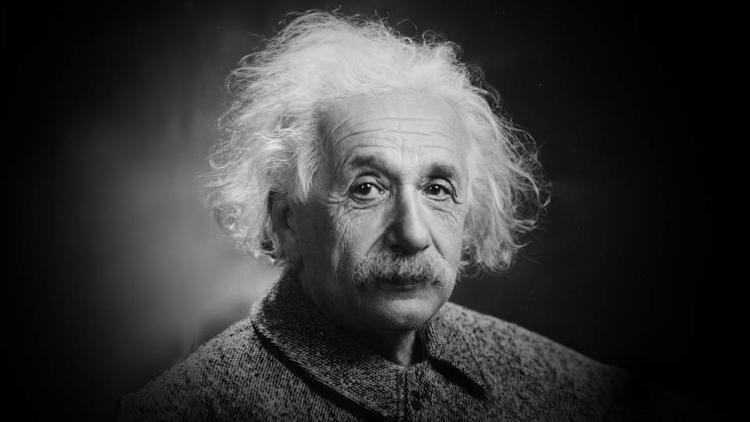
Albert Einstein’s general theory of relativity, published in 1915, fundamentally changed how scientists understood gravity. Rather than describing it simply as an invisible force pulling objects together, Einstein explained gravity through the curvature of spacetime caused by mass and energy. Massive objects distort the geometry of the universe, and other objects move through that distorted spacetime. Black holes represent one of the most extreme consequences of that theory. Pack enough mass into a sufficiently small region, and spacetime becomes so severely curved that nothing, not even light, can escape once it crosses the event horizon. The orange glow in the M87 image isn’t the black hole itself. It’s radiation from extremely hot material surrounding it, with light distorted by the black hole’s immense gravitational field. The dark central region is associated with the black hole’s shadow, created by the way gravity captures and bends light. The newly validated ring strengthens confidence that the observations match the broad predictions of general relativity. Einstein died in 1955, long before anyone could produce this kind of image, but more than a century after his theory transformed physics, scientists are still finding extraordinary ways to test his ideas. At this point, Einstein’s record is getting downright ridiculous.
Of course, you can’t have a serious discussion about black holes without mentioning Stephen Hawking, who spent much of his scientific career investigating the strange relationship between gravity, quantum mechanics, and the nature of these extraordinary objects. One of his most famous contributions was the prediction that black holes aren’t completely black. According to Hawking’s calculations, quantum effects should cause them to emit an extremely faint form of radiation, now appropriately known as Hawking radiation. Over immense periods of time, this process would theoretically cause black holes to lose mass and eventually evaporate. Unfortunately, if you’re waiting for M87* to disappear, you might want to bring a comfortable chair, a few snacks, and perhaps several billion generations of your descendants. A black hole containing billions of solar masses would take an almost incomprehensibly long time to evaporate through this process. There’s also an important scientific distinction worth making: the new Australian research supports the validity of the black hole image and its consistency with Einstein’s theory, but it doesn’t demonstrate Hawking radiation, which remains extraordinarily difficult to observe directly from astrophysical black holes.
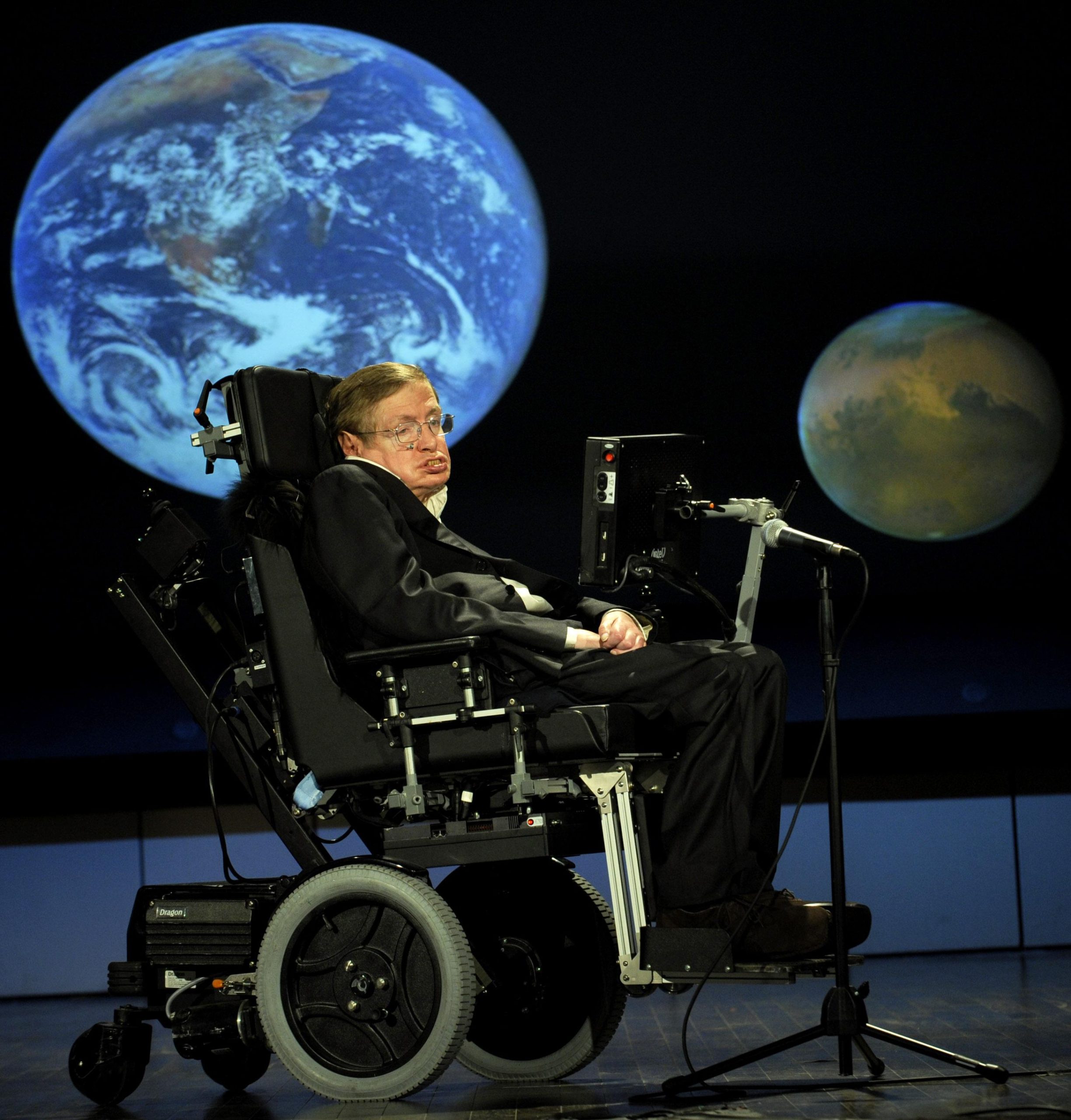
Speaking of Hawking, I can’t discuss the man without remembering one of my favorite moments from The Big Bang Theory. Howard Wolowitz, played brilliantly by Simon Helberg, had a habit of impersonating Hawking’s distinctive computerized speaking voice by pressing his finger against his lips. It was one of those wonderfully ridiculous performances that made the character so entertaining, especially considering Howard’s enormous confidence in his own intellectual abilities. The particularly funny part is that Hawking himself appeared on the show and reportedly enjoyed Helberg’s impression during rehearsal. Imagine being one of the greatest theoretical physicists in history, having spent decades exploring the deepest mysteries of the universe, only to discover that a sitcom engineer can imitate your voice with his finger and his lips. And having the sense of humor to laugh about it. I’ve always appreciated that combination of extraordinary intelligence and the ability to enjoy a joke. Science doesn’t have to be humorless, even when the subject involves objects capable of swallowing entire stars.

And I have to admit, I’ve been guilty of doing that same ridiculous impression myself. A finger against the lips, a little vocal manipulation, and suddenly everybody’s a theoretical physicist. Well, at least until somebody asks you to explain quantum mechanics. I like to imagine Hawking examining the latest reconstruction, giving the researchers a nod of approval, and then wondering why it took everyone seven years to confirm that the giant glowing doughnut was, in fact, a giant glowing doughnut.
Artificial Intelligence Meets the Scientific Method
There’s another aspect of this research worth appreciating, especially considering how quickly artificial intelligence is finding its way into practically everything. The researchers weren’t asking AI to invent a picture of a black hole. They were using it as part of a carefully tested scientific method to reconstruct an image from actual telescope measurements, which is a very different proposition. The system was tested on other astronomical observations, its procedures were established before it examined the M87 measurements, and the researchers checked their conclusions using a more conventional mathematical approach. That distinction matters because AI is exceptionally good at producing convincing-looking results, whether those results are correct or complete nonsense. We’ve all seen the spectacular images artificial intelligence can create, along with the occasional six-fingered hand, mysterious extra limb, or object that looks perfectly reasonable until you examine it for more than three seconds. When the subject is a black hole, a convincing picture isn’t good enough. The image has to be supported by the measurements, and the method has to withstand scrutiny from other scientists.
That’s why this research is important beyond the photograph itself. It demonstrates how artificial intelligence can assist scientific investigation without replacing the scientific method. The machine didn’t simply announce that the original image was correct. Researchers designed a different way to analyze the evidence, tested their approach, and compared the results with previous findings. The fact that the new reconstruction agrees with the original is meaningful independent confirmation of the image-processing methods, although both analyses ultimately rely on observations from the Event Horizon Telescope. Science advances when extraordinary claims survive independent examination, not when somebody produces a convincing graphic and announces that the computer said so. Considering the current enthusiasm for attaching artificial intelligence to everything from refrigerators to toothbrushes, it’s refreshing to see an application where the technology is doing something genuinely useful.
Despite this achievement, black holes remain among the most mysterious objects in the universe. Scientists still want to understand precisely how matter behaves near the event horizon, how black holes launch enormous jets of energetic particles, and how gravity and quantum mechanics fit together under such extreme conditions. Future improvements to telescope networks, observation techniques, and image reconstruction could reveal details that are currently impossible to distinguish. The ultimate goal isn’t simply to produce prettier photographs. Better observations may help scientists test the limits of Einstein’s theory, investigate black hole rotation, and perhaps uncover clues about physics we don’t yet understand. The image is an extraordinary accomplishment, but it represents the beginning of a much larger scientific journey rather than the end of one.
A little more than a century ago, black holes were largely mathematical consequences of a revolutionary theory of gravity. For decades, scientists debated their properties and searched for convincing evidence that such extraordinary objects existed. In 2019, we finally saw the shadow of one. In 2026, another team independently checked the evidence and confirmed the picture’s defining feature. Einstein’s theory continues to hold up, Hawking’s scientific legacy continues to inspire new questions, and artificial intelligence has demonstrated that, when used carefully, it can help scientists examine the universe in ways that weren’t previously practical. As for the rest of us, we’re left staring at a glowing orange ring 55 million light-years away, trying to comprehend an object containing the mass of 6.5 billion Suns. I still think it looks like a doughnut, but it’s one spectacular doughnut.
Sources: CSIRO, Nature, Event Horizon Telescope Collaboration. Images credited to their respective creators and rights holders.