





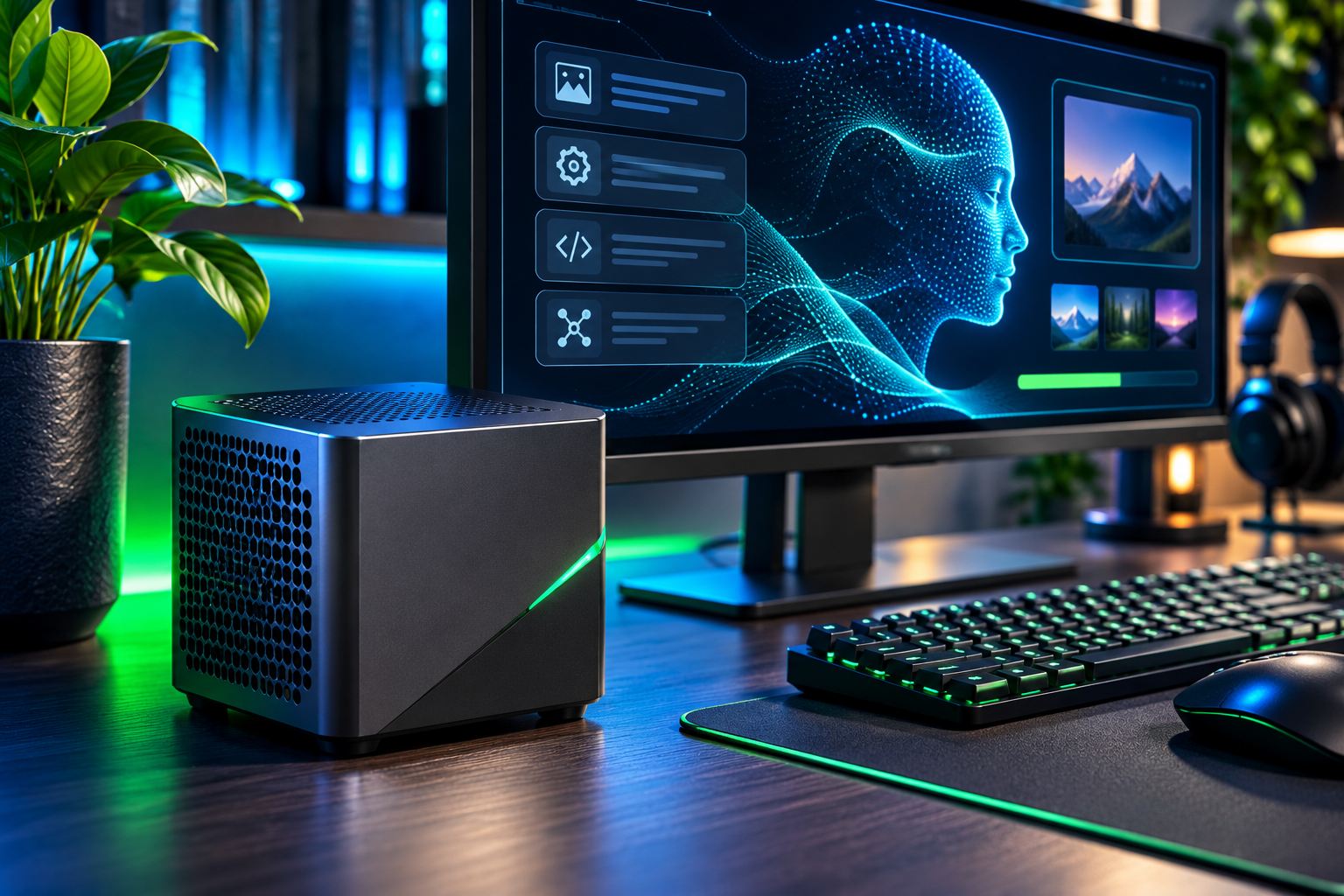
Artificial intelligence is becoming part of just about everything we do on our computers, but most of the heavy lifting still happens somewhere in a distant data center. Gigabyte thinks it’s time to bring that processing power home. The company has introduced the AI TOP AERO, a remarkably compact desktop computer designed to run sophisticated AI models locally without constantly relying on cloud services. At approximately one liter in volume, it’s considerably smaller than a traditional desktop tower, although what’s packed inside is anything but ordinary.
The AI TOP AERO uses Nvidia’s RTX Spark N1X Superchip, combining a 20-core Grace processor with Blackwell RTX graphics. Configurations can support up to 128GB of unified memory and 4TB of solid-state storage, giving developers and creators room to experiment with demanding AI applications. Gigabyte also includes Windows 11, Wi-Fi 7 and 10-gigabit Ethernet connectivity. The company is positioning the machine as a personal AI studio capable of handling local language models, content creation, automated workflows and even supported games.
So why would anyone want AI running on their own computer instead of simply opening ChatGPT or another cloud service? Privacy is one compelling reason. Depending on the software and configuration, local processing can keep sensitive documents, personal information and creative projects on your own hardware. It can also reduce dependence on internet connectivity and recurring cloud-computing charges. Imagine running an AI assistant that helps organize your files, develops software or processes photographs without sending every request to somebody else’s server. That’s an appealing idea, particularly for anyone who prefers controlling their own technology.
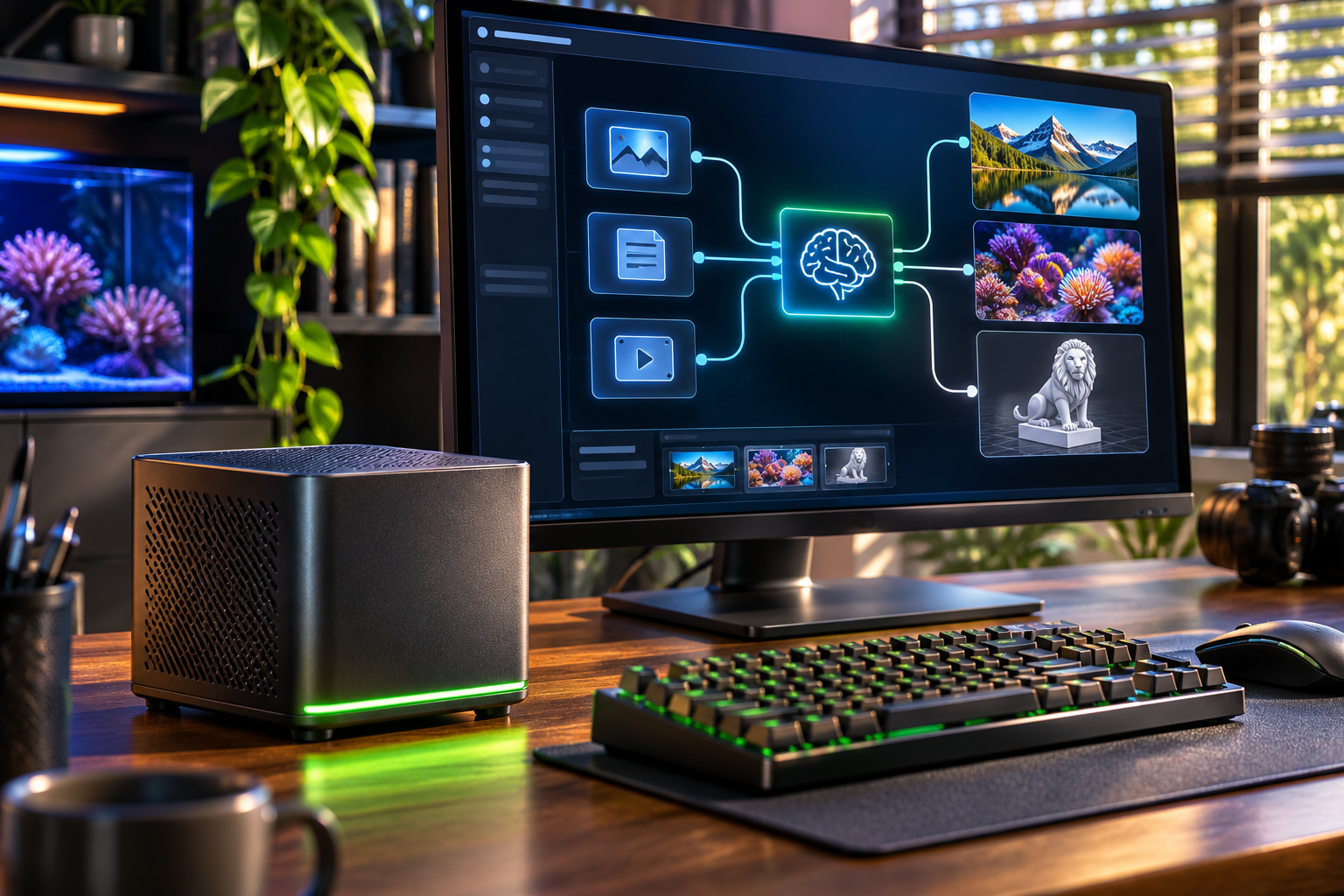
Of course, there’s a difference between running an AI assistant locally and running one well. Gigabyte says the system supports tools including Ollama, LM Studio and ComfyUI, along with Nvidia’s AI development ecosystem. But actual performance will depend on the models being used, available memory and how effectively the software takes advantage of the hardware. Squeezing substantial computing power into such a small enclosure also raises questions about cooling and sustained performance, something independent testing will need to establish.
Then there’s the rather important matter of price. Gigabyte announced the AI TOP AERO in November but hasn’t provided a U.S. retail price or confirmed configurations and availability. Competing systems with similar ambitions already cost several thousand dollars, suggesting this isn’t likely to become an impulse purchase alongside your next wireless mouse. Gigabyte may have created an impressive little machine, but until consumers know what it costs and can actually buy one, the company is selling a vision more than a finished shopping proposition.
Still, the broader idea is fascinating. As AI becomes increasingly useful, personal computers may evolve from devices that simply access cloud intelligence into machines capable of running powerful assistants independently. Whether that future arrives as an affordable desktop or an expensive enthusiast toy remains to be seen. Would you pay extra to keep your AI processing and personal data on your own computer, or are you perfectly happy letting the cloud do the work? Tell us what you think in the comments.
Sources: Gigabyte official announcement; TechRadar reporting.