






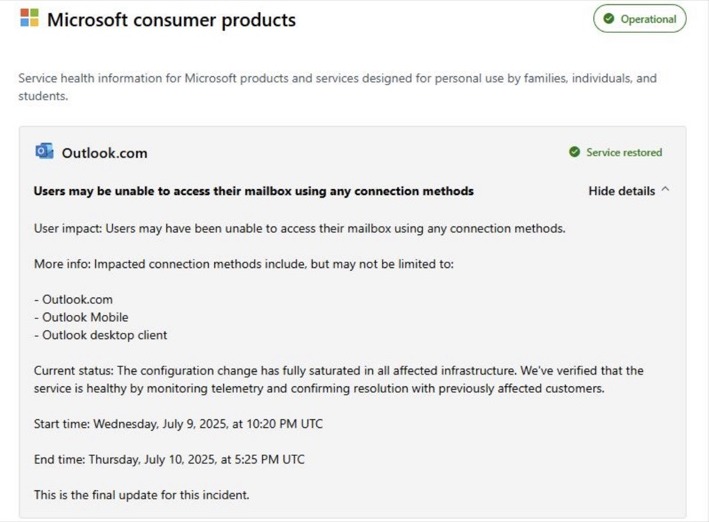
If you thought the recent technology outages were going to be followed by a nice quiet stretch of dependable computing, Microsoft president Brad Smith has offered a somewhat less comforting outlook. In a November 22 interview on CBS, he discussed the heightened risks associated with rapidly repairing software vulnerabilities. Wonderful. Just what I wanted to hear before opening my laptop.
The distinction that matters is that Smith said artificial intelligence was not responsible for Microsoft’s November outage. His broader concern was that faster discovery and remediation of security weaknesses can put pressure on older infrastructure and the processes used to test changes. That is a warning about risk, not a prediction that any particular service will fail on a particular date.
I find the discussion fascinating because the cloud has made us remarkably productive while quietly removing some of our independence. We can reach documents from almost anywhere, collaborate in real time and stop worrying about running our own mail servers. But when access disappears, a surprising number of otherwise perfectly functional computers turn into very expensive paperweights.
This is not an argument for abandoning the cloud. It is an argument for making sure we have alternatives. Keep important contact information available offline, retain local copies of essential files where company policy allows, and understand which applications can continue working without an internet connection. Businesses should test their continuity plans rather than discover during an outage that the plan is stored on the inaccessible service.
There is a temptation to read a story about risky software updates and conclude that we should stop installing them. That would be the wrong lesson. Security updates are important; providers need disciplined testing and recovery procedures, while customers need a sensible way to continue working when a service becomes unavailable. Those objectives are entirely compatible.
I would love to see a future in which the smartest thing about our technology is how gracefully it handles failure. Like this article if you have ever been held hostage by a spinning cloud-service icon, and tell us what one application you would insist on being able to use offline.