






Microsoft has finally explained what caused last week’s massive Outlook and Microsoft 365 outage, and I have to admit, this one is pretty impressive. Not the good kind of impressive, mind you, but the kind that makes you wonder how one of the world’s largest technology companies can spend billions developing artificial intelligence while a software bug sits unnoticed for four months, waiting to bring everything to its knees. On November 12, businesses around the world suddenly found themselves without reliable email, Outlook access, and several other Microsoft services. The disruption lasted nearly 24 hours, leaving customers wondering when things would return to normal. Somewhere, an IT department probably had to explain for the hundredth time that restarting your computer wasn’t going to fix Microsoft.
According to Microsoft’s preliminary investigation, the trouble started back in July when a software update introduced a defect into the company’s network gateway infrastructure. Apparently, the bug wasn’t discovered during testing because Microsoft’s testing didn’t adequately reproduce the behavior of its newer, more powerful production servers. You really can’t make this stuff up. Fast-forward to November 12, when a Microsoft Teams failover redirected additional traffic toward those gateways, while an unrelated problem had already taken approximately 14% of their capacity offline. Think of it as closing several lanes of an interstate during rush hour, redirecting everyone onto the same exit ramp, and then wondering why traffic isn’t moving.

Eventually, more than 80% of the affected gateway servers became unresponsive. And if that wasn’t enough, Microsoft’s automated recovery systems kept redirecting traffic toward other servers vulnerable to the same problem. Apparently, even the backup plan needed a backup plan. The really interesting part is that Microsoft couldn’t simply restart everything and call it a day. The backlog of requests was so enormous that restarting servers risked triggering the same failure all over again. Rolling back recent changes wasn’t particularly helpful either, since the original bug had been lurking in the system since July.
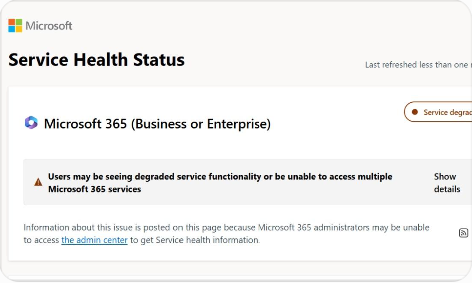
Engineers eventually developed a targeted fix, restored capacity, and carefully brought servers back online. Microsoft says it has since increased capacity, improved monitoring, and added safeguards to prevent similar cascading failures. A final incident report is expected November 20, which should hopefully explain more about why the company’s regional isolation systems failed to contain the problem. That’s certainly reassuring, although I’m guessing most customers would have preferred those safeguards sometime before their email stopped working. Microsoft also confirmed that the outage wasn’t caused by a cyberattack or AI agents, so we can’t even blame the robots for this one.
But here’s something that makes this considerably more serious than a few missed emails. According to reporting from The Verge, a hotel in Germany experienced a dangerous swimming pool chlorine incident while Microsoft’s email services were unavailable. A separate technical malfunction caused excessive chlorine levels, but the hotel’s automated safety notification reportedly couldn’t deliver its warning because it depended on email. Fifteen people were affected, including four who reportedly required hospital treatment. Microsoft didn’t cause the chlorine malfunction, but the incident raises an uncomfortable question about relying on cloud email for critical safety notifications. Sending the office birthday invitation through Outlook is one thing. Depending on it to warn people about a potentially dangerous situation without an independent backup is something entirely different.
And that’s really the bigger issue. We’ve spent years moving everything into the cloud because it’s supposed to be easier, safer, and more dependable than maintaining our own infrastructure. No servers to manage, no expensive equipment to replace, and supposedly fewer headaches. Unfortunately, when the cloud decides to take a day off, everyone gets the same headache at the same time. I’m certainly not suggesting we return to filing cabinets and fax machines, although I’m fairly certain a fax machine somewhere was feeling pretty smug last Thursday.

But perhaps it’s time businesses reconsidered just how much of their daily operations depend on a single company’s infrastructure. Microsoft will fix the software, publish its report, and move on to the next big innovation. The rest of us are left wondering whether the world’s most advanced technology companies have become so focused on what comes next that they’re forgetting to maintain what we already depend on. When the systems designed to protect against failures actually help spread them, somebody needs to take a serious look at the engineering.
Maybe Microsoft should spend a little less time teaching Copilot how to write our emails and a little more time making sure Outlook can actually deliver them. What do you think? Have we become too dependent on Microsoft’s cloud services, or are occasional outages simply the price we pay for modern technology?
Sources: Microsoft preliminary incident report, BleepingComputer, and The Verge.