






TECH SPOTLIGHT | MOBILITY DIGEST
Most smartphone manufacturers are obsessed with making their cameras smarter, their phones thinner, and their artificial intelligence features more impressive. REDMAGIC has a different obsession: making a smartphone that can run demanding games for hours without turning into an expensive pocket warmer.
Meet the REDMAGIC 12 Pro, a gaming-focused Android flagship featuring an 8,400mAh battery, 185Hz AMOLED display, Qualcomm Snapdragon 8 Elite Extreme Gen 6 processor, and a cooling system that sounds like something borrowed from a desktop gaming computer.
We’re talking about circulating liquid coolant, a miniature mechanical pump, a vapor chamber, liquid metal, and an actual fan spinning at 25,500 RPM. All inside a phone measuring just 8.55mm thick.
With prices starting at $899, the REDMAGIC 12 Pro makes a compelling argument that gaming phones deserve their own category. But how much of this engineering translates into meaningful everyday advantages, and what sacrifices come with it?

Performance: More Than Another Fast Processor
At the heart of the REDMAGIC 12 Pro is Qualcomm’s Snapdragon 8 Elite Extreme Gen 6, built using an advanced 2nm manufacturing process. The chip uses Qualcomm’s Oryon CPU architecture and is designed to deliver exceptional performance while improving energy efficiency.
REDMAGIC supplements the main processor with its dedicated RedCore R5 gaming chip and G1 display control chip. Together, these components manage gaming-related functions such as touch responsiveness, display performance, and supported graphics enhancements.
Memory configurations include 12GB or 16GB of RAM, while storage options range from 256GB to 1TB. REDMAGIC uses high-speed LPDDR5X Ultra Pro memory and UFS 4.1 Pro storage in supported configurations.
Those specifications are impressive, but gaming performance isn’t simply about how quickly a processor completes a benchmark. The real challenge is maintaining consistent performance after 30, 60, or even 90 minutes of demanding gameplay.
Most smartphones manage rising temperatures by reducing processor speeds, a process called thermal throttling. This protects the hardware but can cause noticeable drops in gaming frame rates.
REDMAGIC’s answer is unusually aggressive thermal engineering.
Liquid Cooling: The Star of the Show
The REDMAGIC 12 Pro introduces AquaCore Cooling System 3.0, an elaborate combination of dual-loop circulating liquid cooling, a large vapor chamber, Liquid Metal 4.0, and a 25,500 RPM turbofan.
Unlike conventional smartphones that rely primarily on passive heat dissipation, the 12 Pro includes a miniature pump that actively circulates coolant through sealed channels.
REDMAGIC designed the cooling loops to distribute heat from both the processor and battery areas. The company claims its revised design improves heat-spreading efficiency by 27% compared with the earlier 11 Pro cooling arrangement.

The system also includes a vapor chamber, which uses the evaporation and condensation of an internal working fluid to spread heat. This is separate from the phone’s actively circulating liquid-cooling loops.
Liquid Metal 4.0 provides another thermal transfer layer, helping conduct heat away from critical components.
Finally, the miniature fan moves air through the phone’s internal cooling channel to expel heat.
According to REDMAGIC, its redesigned vapor chamber provides 50% higher thermal conductivity under the company’s test conditions. The fan also features a reinforced shaft and dust-resistant labyrinth design.
There’s an important distinction here: effective cooling doesn’t necessarily mean the outside of the phone remains cool. Heat must still move somewhere, and exterior surfaces can become warm during demanding workloads.
The company reports sustained gaming improvements, but independent measurements of surface temperature, fan noise, and performance consistency are more meaningful than manufacturer benchmarks alone.
Still, this is fascinating engineering. REDMAGIC has effectively miniaturized several concepts familiar to PC gaming enthusiasts and packed them into a device that fits in your pocket.
A 185Hz AMOLED Display: Faster Than Most Flagships
The REDMAGIC 12 Pro features a 6.85-inch BOE X11 AMOLED display with a resolution of 2688 by 1216 pixels and a refresh rate reaching 185Hz.
For perspective, many premium smartphones use 120Hz displays. At 120Hz, the screen can refresh approximately every 8.33 milliseconds. At 185Hz, that interval drops to roughly 5.41 milliseconds.
That difference may seem insignificant, but fast-paced games depend on responsive controls and smooth animation.
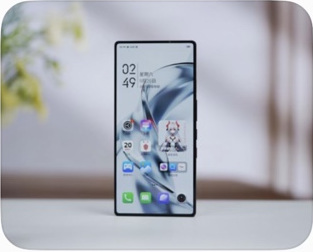
REDMAGIC also includes a 5,000Hz instantaneous touch sampling capability, with an average sampling rate of 500Hz. These measurements describe touch-input detection rather than the screen’s refresh rate.
There’s a catch, however. A 185Hz display doesn’t automatically make every game run at 185 frames per second. Games must support the necessary frame rates, and performance enhancements such as frame interpolation are not equivalent to native rendering.
The display also incorporates an under-screen front camera, eliminating the usual punch-hole interruption. Extremely narrow 0.96mm bezels create a screen-to-body ratio of approximately 96.3%, according to REDMAGIC.
Brightness reaches a manufacturer-rated 1,900 nits globally and 5,000 nits in localized peak conditions. Those figures should not be confused with sustained full-screen brightness.
For gaming and multimedia consumption, the uninterrupted AMOLED display is one of the phone’s most attractive features.
An 8,400mAh Battery That Means Business
One of the biggest limitations of high-performance mobile gaming is battery endurance. Powerful processors, high-refresh-rate screens, and active cooling all consume energy.
REDMAGIC addresses this problem with a massive 8,400mAh battery.
That’s approximately 12% more capacity than a 7,500mAh battery, giving the 12 Pro substantial room to support extended gaming sessions.
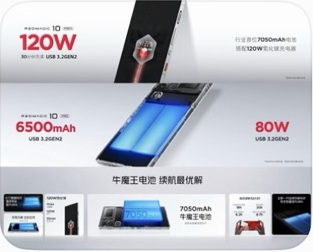
The phone supports up to 80W wired charging and 80W wireless charging, along with reverse charging capabilities.
REDMAGIC also includes Charge Separation, a feature intended to supply power during gaming while reducing unnecessary battery charging and associated heat.
Actual battery life will depend on gaming intensity, display brightness, cellular connectivity, fan operation, and software optimization. An enormous battery doesn’t automatically guarantee exceptional endurance under every workload.
Nevertheless, battery capacity is a meaningful advantage for gamers who spend long periods away from a charger.
Shoulder Triggers: A Smartphone With Controller DNA
The REDMAGIC 12 Pro includes built-in capacitive shoulder triggers with a 520Hz touch sampling rate.
When holding the phone horizontally, players can use these triggers for actions such as aiming, firing, or activating abilities in compatible games.
Instead of covering valuable screen space with additional fingers, gamers can assign supported actions to the edges of the device.
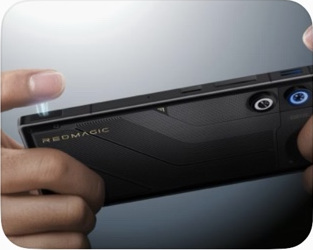
REDMAGIC also includes dual stereo speakers with Dolby Atmos certification and an X-axis linear vibration motor for tactile feedback.
Its GameSpace software provides access to performance settings and gaming-specific controls, while the dedicated Magic Key can launch GameSpace or perform customizable functions.
The company additionally advertises Steam-related PC gaming capabilities. However, buyers should investigate the compatibility and emulation requirements for individual games rather than assuming the entire Windows gaming library runs natively on Android.
Can It Function as Your Everyday Phone?
For all its gaming hardware, the REDMAGIC 12 Pro remains a fully capable Android smartphone.
It ships with REDMAGIC OS 12 based on Android 17 and includes Wi-Fi 7, Bluetooth 6.0, NFC, dual physical SIM support, USB 3.2 Gen 2, an infrared blaster, and a 3D ultrasonic fingerprint reader.
Its camera hardware includes a 50MP main camera with optical image stabilization, a 50MP ultrawide camera, and a 16MP under-display selfie camera.
Those specifications are respectable, although camera performance involves much more than megapixel counts. Image processing, autofocus, low-light photography, and video quality remain important considerations.
Under-display selfie cameras also face optical challenges because incoming light must pass through the display structure. REDMAGIC uses processing enhancements, but buyers who prioritize selfies or video calls should examine actual sample photographs.
The phone carries IP68 and IP69 ratings, with the fan separately rated IPX8 under specified test conditions. As always, water-resistance claims have limitations and should not be treated as a guarantee against liquid damage.
One notable omission is eSIM support. The 12 Pro uses two physical nano-SIM cards, which may inconvenience frequent international travelers.
American buyers should also verify carrier compatibility, particularly network certification and supported features, before purchasing.
Design: A Gaming Phone That Doesn’t Hide Its Personality
The REDMAGIC 12 Pro is available in Nightfreeze and Subzero finishes. Its transparent-inspired styling, illuminated cooling components, and RGB accents give the phone a distinctive appearance.
Unlike many conventional flagships, REDMAGIC makes its engineering part of the visual experience.
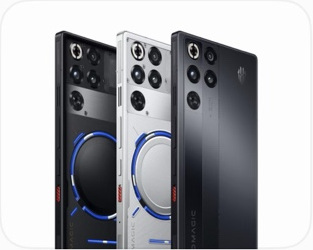
The phone measures 163.03 by 75.96 by 8.55mm and weighs 223 grams. An aluminum alloy frame and Gorilla Glass rear protection contribute to its construction.
The flat rear design also helps the phone rest more evenly on a surface, although the overall size and weight remain substantial compared with smaller smartphones.
REDMAGIC 12 Pro: Price and Configurations
General sales opened November 18, 2026, with the following announced U.S. prices:
- 12GB RAM / 256GB storage: $899
- 16GB RAM / 512GB storage: $999
- 16GB RAM / 1TB storage: $1,199
Nightfreeze is available across all three configurations, while Subzero is offered in the higher-memory configurations.
For current pricing and availability, visit the official REDMAGIC 12 Pro product page.
Strengths and Weaknesses
What we like: The dual-loop liquid cooling system is a genuinely interesting engineering achievement. The 185Hz AMOLED display, large battery, physical gaming triggers, powerful processor, and competitive starting price make the 12 Pro especially appealing to serious mobile gamers.
What gives us pause: Mechanical cooling introduces additional complexity, the phone lacks eSIM, and its camera system may not satisfy buyers accustomed to photography-focused flagships. Long-term software support, fan noise, and sustained performance also deserve careful evaluation.
The phone’s impressive specifications should not be confused with proof that every game will run faster or that the battery will outperform every competing flagship.
Who Should Buy the REDMAGIC 12 Pro?
Competitive mobile gamers: This is the clearest audience. The specialized controls, high-refresh-rate display, active cooling, and large battery are designed around extended gaming sessions.
Technology enthusiasts: The liquid-cooling system alone makes the 12 Pro worth examining. It’s an unusually ambitious example of miniaturized mechanical engineering.
Heavy smartphone users: The large battery, generous memory configurations, and powerful processor may appeal to users who prioritize endurance and multitasking.
Photography enthusiasts: Consider comparing actual camera samples with similarly priced iPhone, Pixel, and Galaxy devices before making a decision.
Casual smartphone buyers: A conventional flagship may provide a more balanced combination of cameras, software support, ecosystem features, and everyday convenience.
The Mobility Digest Verdict
The REDMAGIC 12 Pro is refreshingly unapologetic about what it wants to be.
While the smartphone industry continues to emphasize artificial intelligence, computational photography, and increasingly similar flagship designs, REDMAGIC is exploring what happens when mobile gaming becomes the primary engineering objective.
Its dual-loop liquid-cooling system, 25,500 RPM fan, 185Hz AMOLED display, and enormous battery are not ordinary smartphone features. They’re deliberate choices intended to improve the experience of people who push mobile hardware hard.
Whether those choices justify the price depends on independent testing, game compatibility, and individual priorities. We would particularly like to see consistent measurements of sustained frame rates, surface temperatures, fan noise, charging behavior, and long-term reliability.
But there’s no denying that the REDMAGIC 12 Pro is one of the more technically fascinating smartphones of 2026.
And frankly, in an industry where almost every flagship looks like another glass rectangle, a phone with circulating coolant and a 25,500 RPM fan is a welcome change of pace.
What do you think? Would you sacrifice some camera capabilities and mainstream conveniences for a phone with active liquid cooling and dedicated gaming controls? Or has mobile gaming hardware become more elaborate than the games themselves?
Sources: REDMAGIC Official Specifications | REDMAGIC Engineering Breakdown | REDMAGIC Launch and Pricing